MIC Use Case
OEE, Productivity
From partial visibility to traceable, actionable productivity in continuous improvement.
MIC integrates operational data capture, asset monitoring, and business rules to turn OEE into a real lever of industrial performance, not just a reporting metric.
MIC PHILOSOPHY: MODULAR PLATFORM, PROGRESSIVE TRANSFORMATION
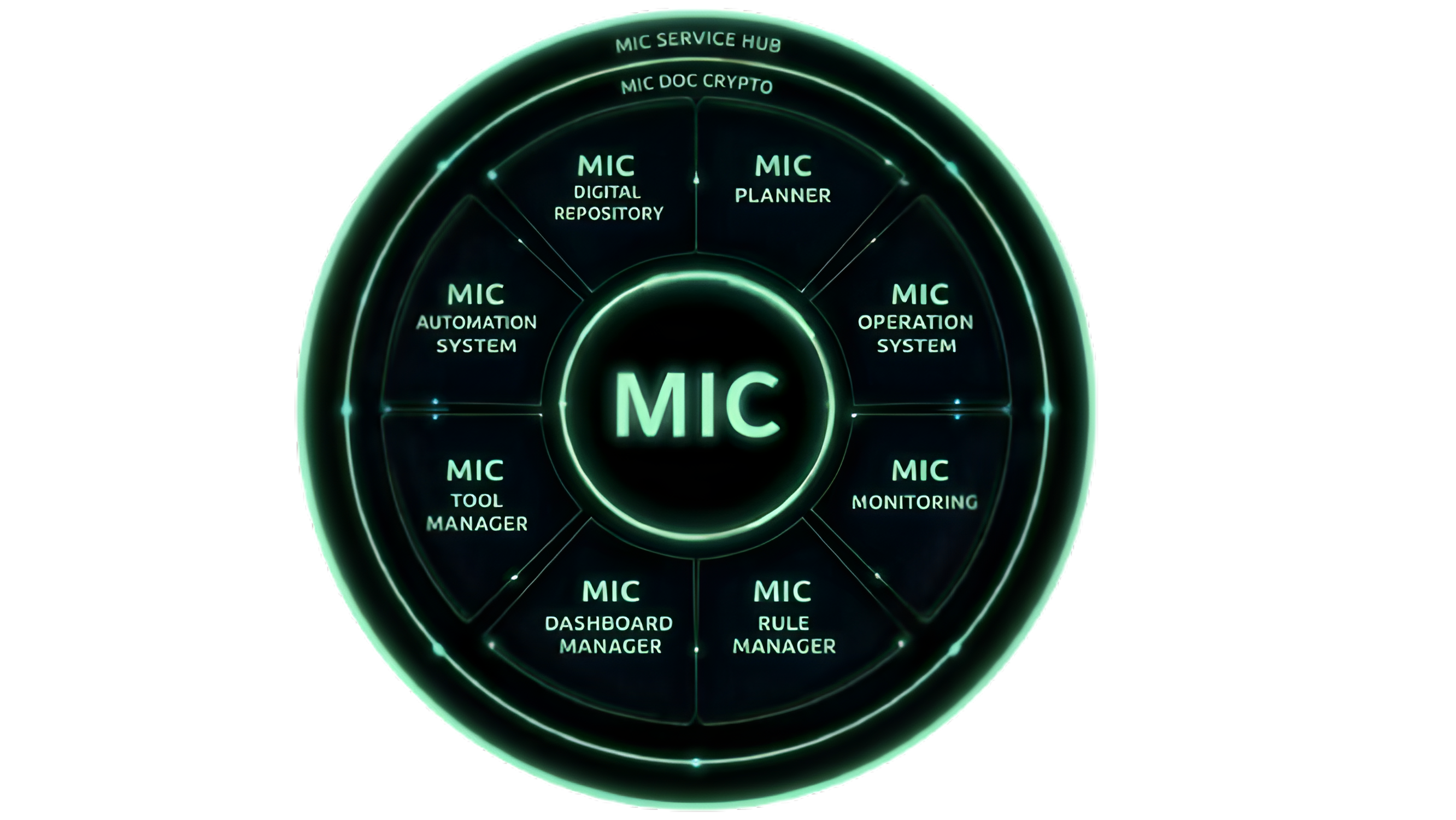
MIC is built on a clear vision: a modular platform that adapts to the digital maturity of each industrial organization. Instead of imposing a rigid model, MIC enables progressive deployment of use cases by combining modules to solve concrete needs in operations, maintenance, quality, planning, and control.
Its architecture allows teams to start by digitalizing a specific part of plant operations and evolve in an orderly way toward advanced automation scenarios. This enables standardization, equipment connectivity, and coordinated operations across multiple sites while keeping traceability, operational consistency, and scalability throughout the industrial lifecycle.
From targeted digitalization to full automation, MIC supports every stage of industrial transformation.
Signals you need this use case
OEE without operational context
You have metrics, but you cannot precisely identify the causes behind each loss.
Unstandardized stops and micro-stops
Each line or shift reports incidents with different criteria, making comparative analysis difficult.
Misalignment between production and maintenance
Planning does not dynamically incorporate real machine events and capacity.
Scattered data across systems
Some information is on the shop floor, some in spreadsheets, and some in isolated systems.
Late corrective actions
You detect deviations when the impact is already consolidated in productivity and compliance.
Difficulty scaling best practices
Teams improve locally, but there is no consistent framework to replicate learning.
HOW MIC SOLVES EL OEE Y LA PRODUCTIVIDAD EN 6 PASOS
MIC turns OEE into a daily operating system: it defines data, captures execution, integrates asset signals, and converts deviations into concrete continuous-improvement actions.
MIC Digital Repository: single productive data model
What it structures
- Assets, lines, shifts, products, and production orders.
- Stop categories, causes, and classification criteria.
- Operational standards and linked technical documentation.
What it enables
A common baseline to measure availability, performance, and quality with consistent traceability across operations.
Without a common model, OEE is neither comparable nor actionable.
MIC Operation System (MOS): captura operativa en tiempo real
How data is captured
The operator records statuses, incidents, format changes, rejects, and stop causes through guided and standardized interfaces.
What it delivers
Less data ambiguity, more reliable analysis, and immediate visibility by cell, line, or shift.
MIC Monitoring: direct connection to real machine behavior
Integrated signals
Capture of asset signals and events (status, speed, times, stops, alarms) through industrial protocols and environment-adapted connectivity.
Value for OEE
Operationally declared data is validated and enriched with automated evidence, reducing bias and improving analytical precision.
MIC Planner: productivity connected to capacity and sequencing
Realistic planning
Production sequences aligned with resource availability and operational constraints.
Synchronization with maintenance
Intervention windows and scheduled stops integrated into the plant plan.
Dynamic management
Rescheduling in response to incidents, bottlenecks, or commercial priority changes.
Impact on OEE
Fewer losses due to misalignment and more stable performance by shift.
MIC Rule Manager: from detection to automatic action triggering
Reglas orientadas a productividad
Definition of thresholds and conditions for availability, performance, and quality to trigger alerts, tasks, or escalations.
Closing the loop
Deviations stop being passive observations and become executable operational workflows.
OEE dashboard + continuous improvement: decisions, learning, and scaling
Executive and operational visibility
Dashboards by plant, line, product, and shift to prioritize improvements and align operations, maintenance, and industrial leadership.
Standardization of learning
Recurring causes and effective actions are documented and replicated across teams, consolidating a culture of sustained improvement.
What your organization gets from this use case
Operational outcome
- Unified visibility of availability, performance, and quality losses.
- Greater ability to react to deviations on the shop floor.
- Less friction between production, maintenance, and planning.
- Standardization of data and processes across lines and sites.
- Continuous improvement supported by evidence and traceability.
KPIs you can improve
- Overall and line-level OEE.
- Real availability of critical assets.
- Losses due to micro-stops and unplanned downtime.
- Performance versus theoretical speed.
- Quality rate and rework.
MIC turns OEE into a continuous-improvement operating system, not a static indicator.
If you want, we can show you this use case applied to your production process, with the level of granularity and automation you need.