MIC Use Case
Industrial cell automation
Integrate robots, CNC, control cabinets, and safety under a single industrial orchestration layer.
MIC enables deployment and governance of automated cells with full traceability, connecting engineering, automation, and operations with a scalable plant architecture.
MIC PHILOSOPHY: MODULAR PLATFORM, PROGRESSIVE TRANSFORMATION
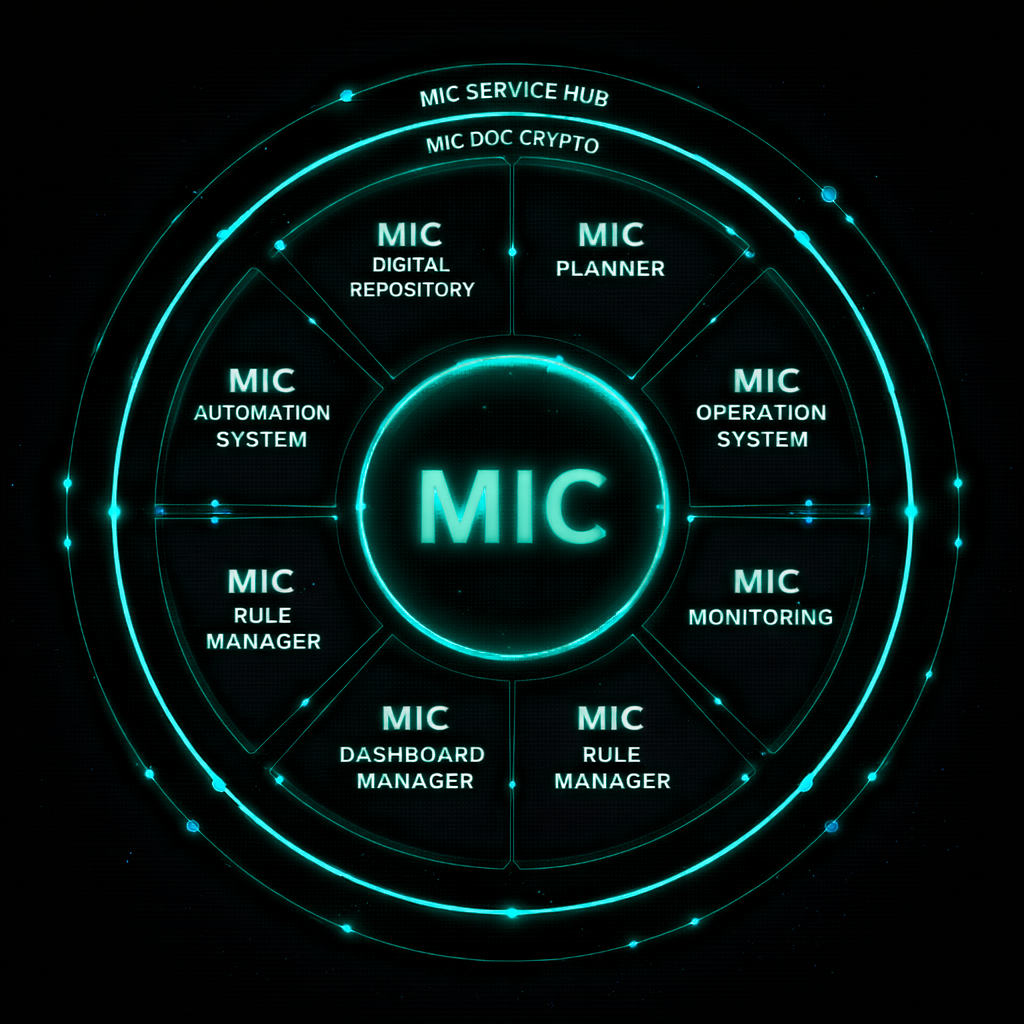
MIC is built on a clear vision: a modular platform that adapts to the digital maturity of each industrial organization. Instead of imposing a rigid model, MIC enables progressive deployment of use cases by combining modules to solve concrete needs in operations, maintenance, quality, planning, and control.
Its architecture allows teams to start by digitalizing a specific part of plant operations and evolve in an orderly way toward advanced automation scenarios. This enables standardization, equipment connectivity, and coordinated operations across multiple sites while keeping traceability, operational consistency, and scalability throughout the industrial lifecycle.
From targeted digitalization to full automation, MIC supports every stage of industrial transformation.
Signals you need this use case
Complex integrations
Robot, CNC, peripherals, and PLCs coexist without a unified control and traceability framework.
Dependence on isolated suppliers
Each cell runs on its own logic, making maintenance, evolution, and scaling difficult.
Safety not integrated with data
Safety signals and states are not connected to shopfloor operational tracking.
Slow commissioning
Engineering, automation, and operations work with disconnected tools and criteria.
Lack of cross-functional visibility
There is no consolidated view of each cell’s status and its impact on production.
Difficult multi-plant scaling
Reusing cell standards across locations is costly and poorly controlled.
HOW MIC SOLVES INDUSTRIAL CELL AUTOMATION IN 5 STEPS
The flow integrates engineering, control, safety, and operations to deploy robust, traceable automated cells aligned with business goals.
Cell architecture design and integration standard
What MIC defines
- Cell topology: robot, CNC, handling, vision, and peripherals.
- Unified data model, events, and operational states.
- Integration strategy with MES/ERP and quality systems.
What it enables
A replicable standard to deploy cells with less technical variability and stronger lifecycle control.
Each cell is born connected to the business, not as an isolated block.
MIC Automation System: centralized cell control
Automation asset control
MIC Automation System coordinates sequences and states across robot, CNC, control cabinet, PLC, and peripherals from a shared logic layer.
Outcome
Fewer ad hoc dependencies between systems and greater robustness for product, cycle, and operating changes.
Integrated safety: functional safety connected to operations
What is integrated
Safety states, interlocks, emergency stops, and operating permissions connected to the real-time cell state.
What it delivers
Higher operational safety and better diagnostics for lockouts, stoppages, and startup/reset conditions.
Guided operations and technical maintenance for the cell
Sequences and format changes
Startup, reference change, and stop with unified instructions by user profile.
Operational diagnostics
Alarms and events linked to robot, CNC, cabinet, or safety with technical context.
Assisted maintenance
Technical intervention flows with checklists, safe lockouts, and traceability.
Status visibility
Clear reading of global cell status for operations, engineering, and maintenance.
Industrial scaling: standardize, replicate, and optimize
Multi-cell standardization
Reusable architecture and logic templates to replicate cells across lines and plants with version control.
Business-oriented continuous improvement
Operational and availability data connected to decisions on productivity, quality, and after-sales service.
What your organization gets from this use case
Operational outcome
- End-to-end control of automated cells from MIC.
- Greater robustness in robot-CNC-cabinet-safety integration.
- Reduced commissioning and changeover times.
- Faster diagnostics and traceability of critical events.
- Orderly scaling of standards across lines and plants.
KPIs you can improve
- Automated cell availability.
- MTTR and incident response time.
- Reference changeover and startup time.
- Stops caused by integration or safety events.
- Deployment time for new cells.
MIC turns cell automation into a scalable, safe, and performance-driven capability.
If you want, we can show you how to apply this approach to your current cells and your automation roadmap.