MIC
MIC Use Cases
How SmartPM transforms industry from data to automation
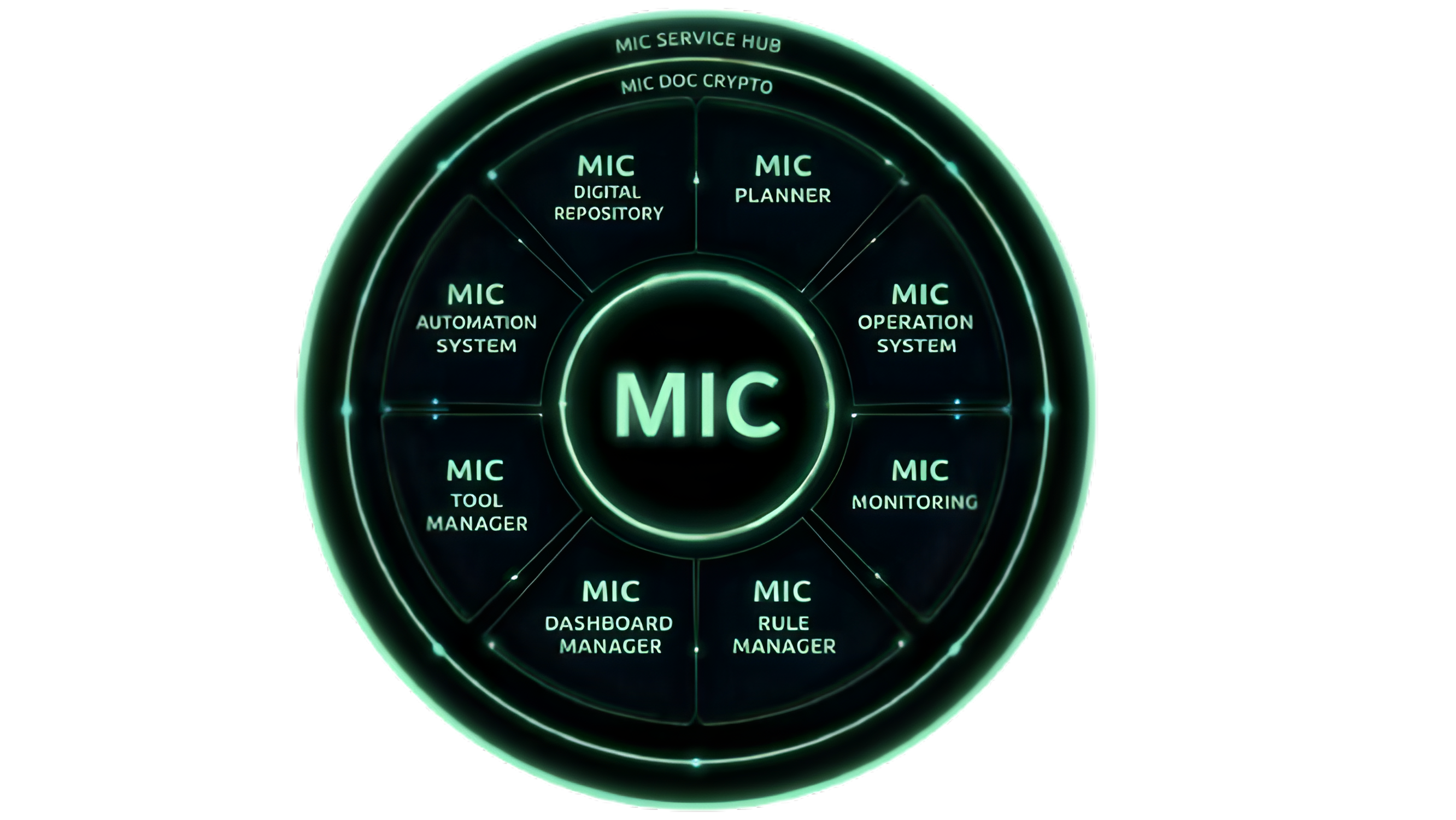
At SmartPM we understand that each industrial plant has its own level of digital maturity, its own operational challenges, and its own production culture. That is why MIC (Manufacturing Intelligence Core) is not a closed software, but a modular platform capable of adapting to different industrial contexts and evolving with the organization.
Below we show how MIC solves real problems across different industries.
Actionable data
Reliable data capture for immediate operational decisions.
Stable processes
Standardization and traceability to reduce variability.
Productive autonomy
Scale and automate with control and safety.
Industries summary
Automotive and Tier suppliers
In the automotive sector, demands are maximum: full traceability, regulatory compliance, demand‑aligned production, and zero tolerance for errors.
With MIC, traceability stops being a complex obligation and becomes a competitive advantage. MIC Operation System tracks each work order, batch, and reference in real time, linking production, quality, and inventory.
When this information is integrated with MIC Digital Repository, technical knowledge is structured and protected. Workflows, process versions, associated documentation, and automated rules ensure that know‑how does not depend on specific people but is embedded in the system. Encryption and security ensure confidentiality and regulatory compliance.
Meanwhile, MIC Planner enables planning aligned with real demand, integrating with ERP and automatically adjusting production to order changes or incidents. This reduces inventory and ensures more reliable Just‑In‑Time deliveries.
In this context, MIC not only digitizes but also standardizes and strengthens operations.
Key advantages
- Full traceability of orders, batches, and references.
- Protected, versioned know‑how.
- ERP‑integrated JIT planning.
Capital goods manufacturing and high‑customization environments
In companies that manufacture to order or with high customization, the main challenge is managing complexity. Dependencies between components, technical documentation, engineering changes, and project‑based planning can create inefficiencies if they are not structured.
Here, MIC Digital Repository acts as the core of industrial knowledge. Manufacturing references, workflows, and associated documentation are centralized, versioned, and protected. This enables technology transfer and safe process scaling.
MIC Planner manages dependencies between components and generates production sequences consistent with actual plant capacity. Scenario simulation enables strategic decisions before committing resources.
Combined with MIC Operation System, you get full visibility of project progress, comparing forecast vs. actual production and detecting deviations in time.
The direct consequence is reduced uncertainty and a greater ability to meet complex commitments.
Outcomes
- Versioned documentation and processes.
- Sequences aligned with real capacity.
- Full visibility of project progress.
Workshops in the process of digitalization
Not all organizations are at the same point. Many plants start from manual processes, scattered data, and strong dependence on operators’ tacit knowledge.
MIC’s strength is its modularity. You can start with shop‑floor data capture using MIC Operation System, structure tool management with MIC Tool Manager, evolve to intelligent planning with MIC Planner, and, once the process is mature, add physical automation with MIC Automation System.
This progressive approach allows you to advance digital maturity without major disruptions or disproportionate investments, ensuring return at each stage.
Progressive path
- Data capture and shop‑floor control.
- Intelligent planning and rules.
- Scalable physical automation.
A common approach: data, control, and autonomy
Regardless of sector, all industries share the same evolutionary logic:
- Capture and structure data.
- Turn data into operational information.
- Automate decisions through rules and intelligent planning.
- Scale toward productive autonomy.
MIC connects machines, people, and external systems in an interoperable and secure architecture, combining operational and historical databases, ERP integration, and development under certified security practices.
The result is a more efficient, more predictable plant that depends less on improvisation.
If you want, I can now:
- Adapt this text to a more commercial, conversion‑oriented tone.
- Rewrite it with a more technical focus (for CTO / Industrial Management).
- Convert each industry into a standalone landing with optimized SEO structure.